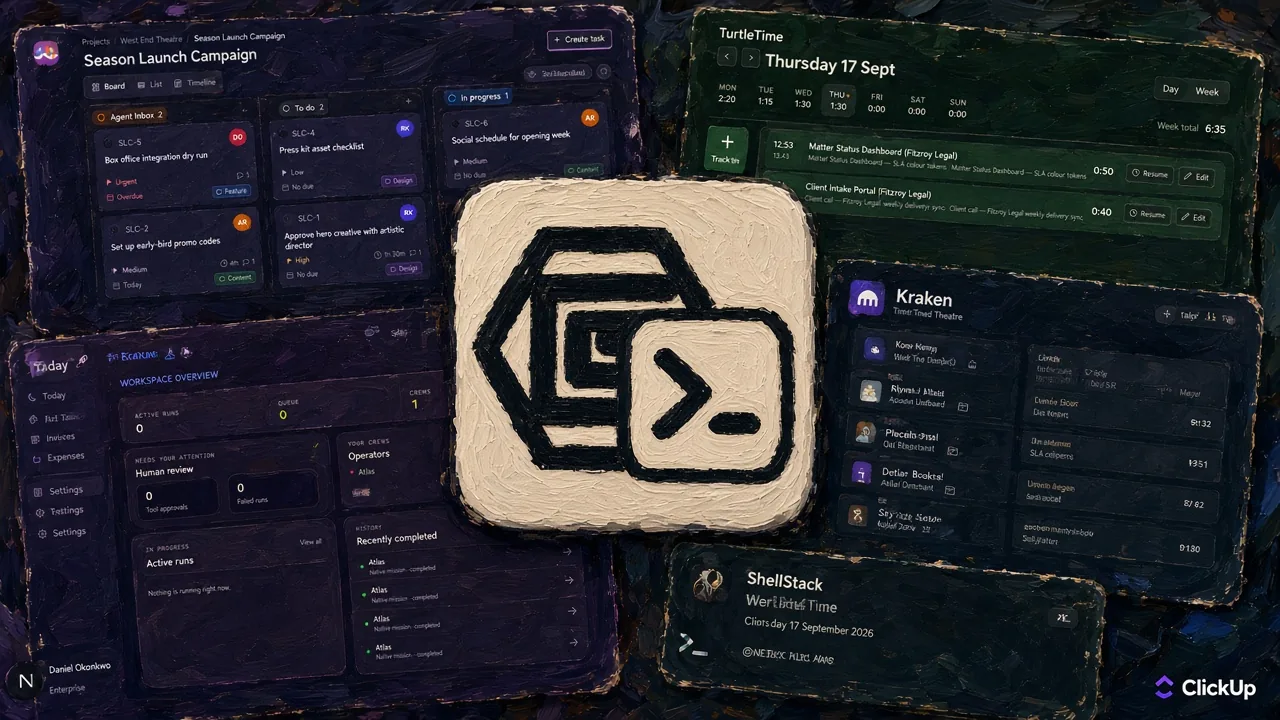
The usual advice is buy the best tool in each category. It sounds adult. It produces a week where the board is Linear, the timer is Toggl, the spec is Notion, the agent is ChatGPT, and the only integration is a person.
| Topic |  Suite Suite |  Linear stack Linear stack |  ClickUp ClickUp |  Atlassian Atlassian |
|---|---|---|---|---|
| Directories | One client list | Four copies | One, inside the blob | Atlassian identities |
| Craft | Specialised apps | Each tool is great | Each module is fine | Each product is heavy |
| Glue | The organisation | Zapier and hope | Not needed, not excellent | The marketplace |
| Hour | One TimeEntry, invoiced in TurtleTime | Toggl, if you remember | A time module | Tempo |
| Agent | Shelly into agent-inbox, gated | ChatGPT in another tab | ClickUp AI | Rovo |
| Events | Composio rules, permission-checked | Native Git | Automations | Automation for Jira |
Pick Suite if
The cost of context-switching between great tools is higher than the cost of not having the single best tool in every category.
Pick Linear stack if
One function is existential — usually engineering speed — and the rest of the suite can be a drawer of tools.
Pick ClickUp if
You want one vendor and you will accept that nothing is excellent.
Pick Atlassian if
You already bought the gravity. Jira plus Confluence is a suite. For some companies it is the correct one.
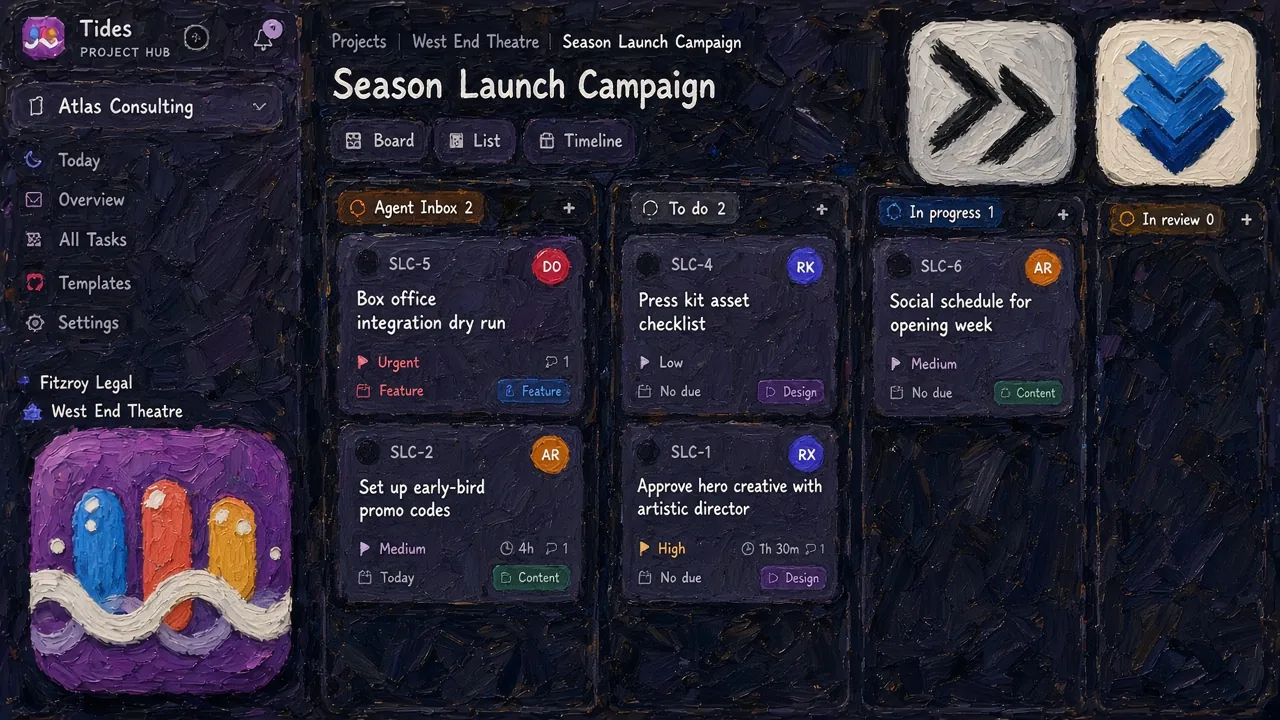
Zapier can move fields. It cannot make the organisations the same. That is why the journal lives here, on ShellStack, instead of five blogs. “Tides versus Linear” is not a Tides-only story. The reason to prefer Tides is TurtleTime on the card and Shelly in the inbox.
The advantage if you choose us
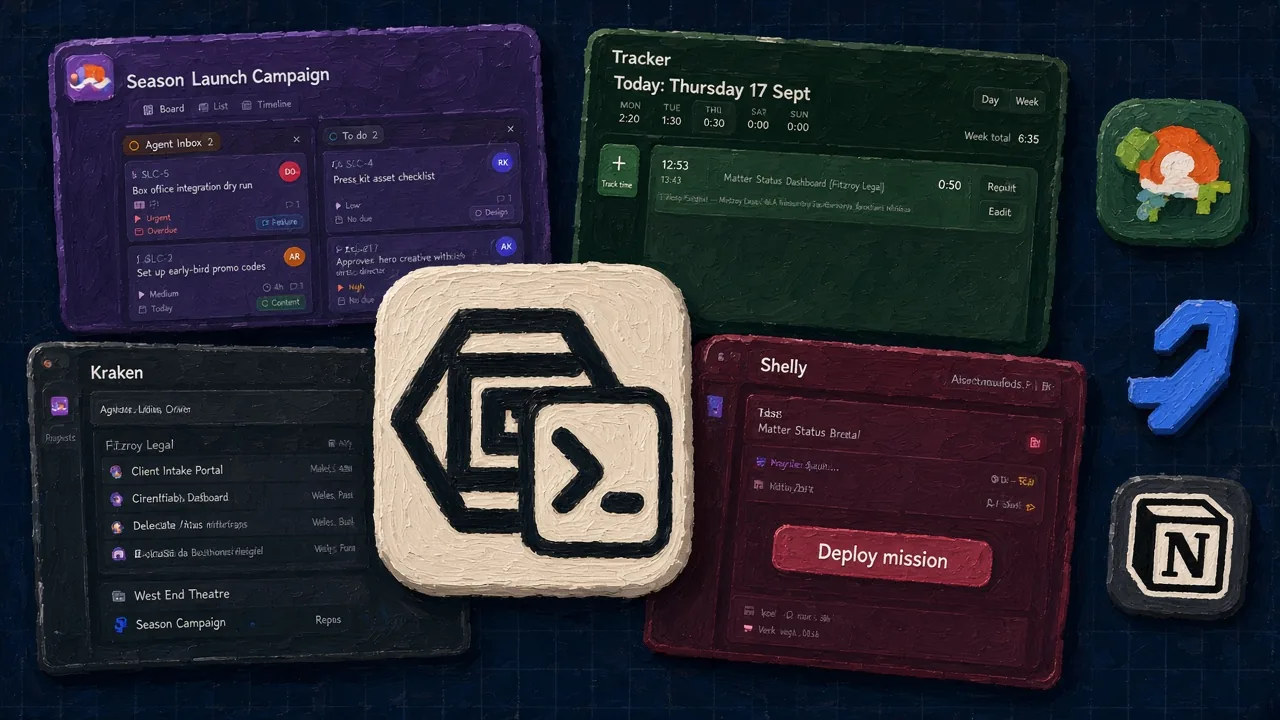
- One client directory. Fitzroy Legal in Tides is Fitzroy Legal on the timer, the invoice and the Kraken sidebar.
- One hour. core.TimeEntry with a tides_task foreign key. Harvest-class invoicing (INV-####, project→member rates) without a second project name.
- One agent, in the product. Shelly Hub for crews. Shelly sidebar for the page you are on (app + path). First-party tools for the board, the timer and the wiki. Writes wait.
- One Composio connection, three uses. Rules: GitHub assigned → Tides task, calendar ended → draft time. Shelly: search_connected_integrations then execute (writes confirm). Kraken Deep Search: the same apps as citation sources.
- One research boundary. API and worker call only CRW. Private SearXNG + Lightpanda/Chrome. Durable AIJob, citations on the row. Django never calls Chrome.
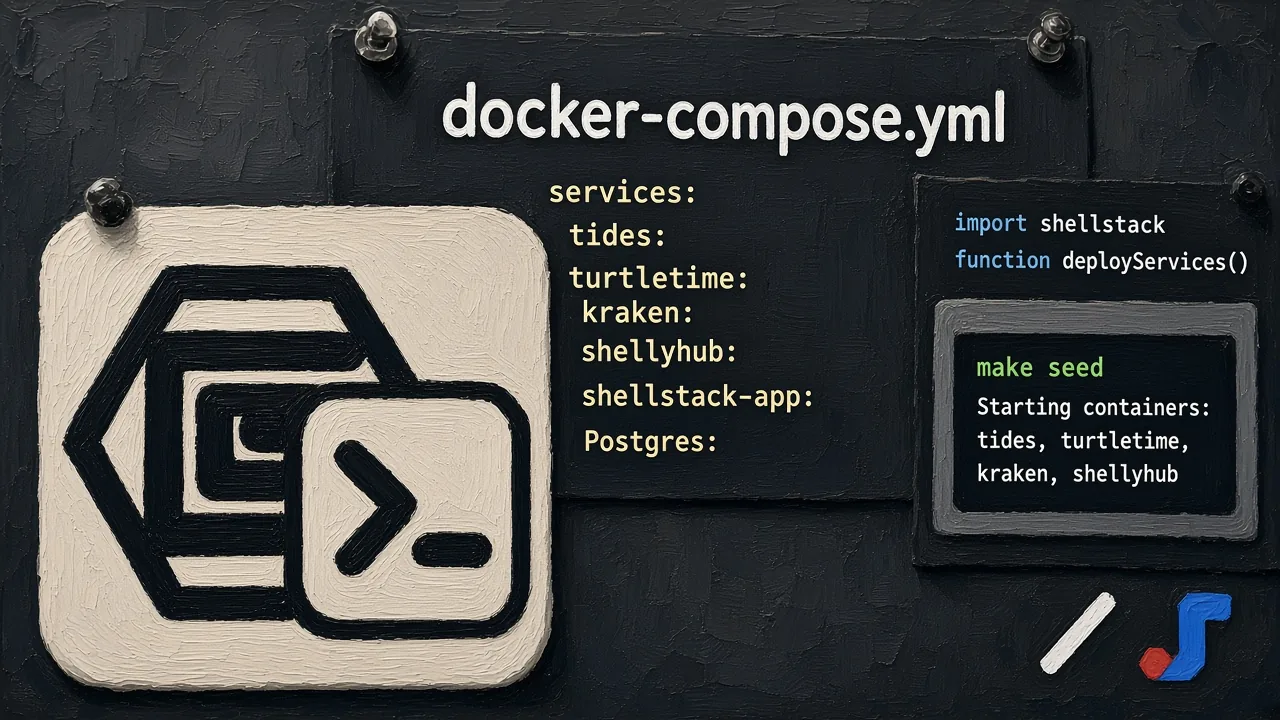
- You can read it. Compose, seed, grep a seat. That is the point of the suite, not a sticker.
Best of breed is a shopping list. A suite is a decision about what is allowed to drift apart.
Use the suite when you are assembling a studio, not a shopping list.