Time tools split into religions. Toggl: start the timer, do not think. Clockify: put the whole company on the free plan. Harvest: the hour becomes an invoice. We took Harvest’s religion and refused the island. The project in Harvest is not the board in Linear. Someone types the name twice. The report is a rumour.
| Topic |  TurtleTime TurtleTime |  Harvest Harvest |  Toggl Toggl |  Clockify Clockify |
|---|---|---|---|---|
| Feel | Commercial timer | Agency billing suite | Personal stopwatch | Cheap team tracker |
| Invoice | From time and expenses | Native, still the deepest | Not the job | Basic, on a paid plan |
| The board | Same Tides task | A second project name | A second project name | A second project name |
| Price story | A suite seat | Per seat, and getting sharper | Polished, paid | Free unlimited users |
| Invoice numbering | INV-#### per workspace, tax, currency | Native invoices, still deepest | Not the job | Paid add-on |
| Rates | Project → member → 0. One line per entry | Project and person rates | N/A | Billable rates on paid |
| Approvals | Submit a week. Tides-sourced stays out until approved | Timesheet approval | Not the job | Approval on paid |
| Automations | Calendar ended → draft time in the ledger | Zapier | Calendar, not a board | Integrations page |
Pick TurtleTime if
You bill, you approve a week, and the timer should point at the same task you moved on the board.
Pick Harvest if
Your accountants already live in Harvest’s invoicing muscle, and switching for a nicer board link is not worth the fight.
Pick Toggl if
You only need a personal timer and a weekly total. Toggl is less software. Use it.
Pick Clockify if
You have a lot of seats and a small budget. Unlimited free users is the product.
Harvest got bought. People are posting renewal screenshots. That is not why we built TurtleTime, but it is why a lot of agencies are shopping. Clockify will take the price-sensitive ones. Toggl will take the ones who just want the timer to be pleasant. The ones who invoice from hours still need the Harvest-shaped product. We wanted that product to see the card.
What we actually ship
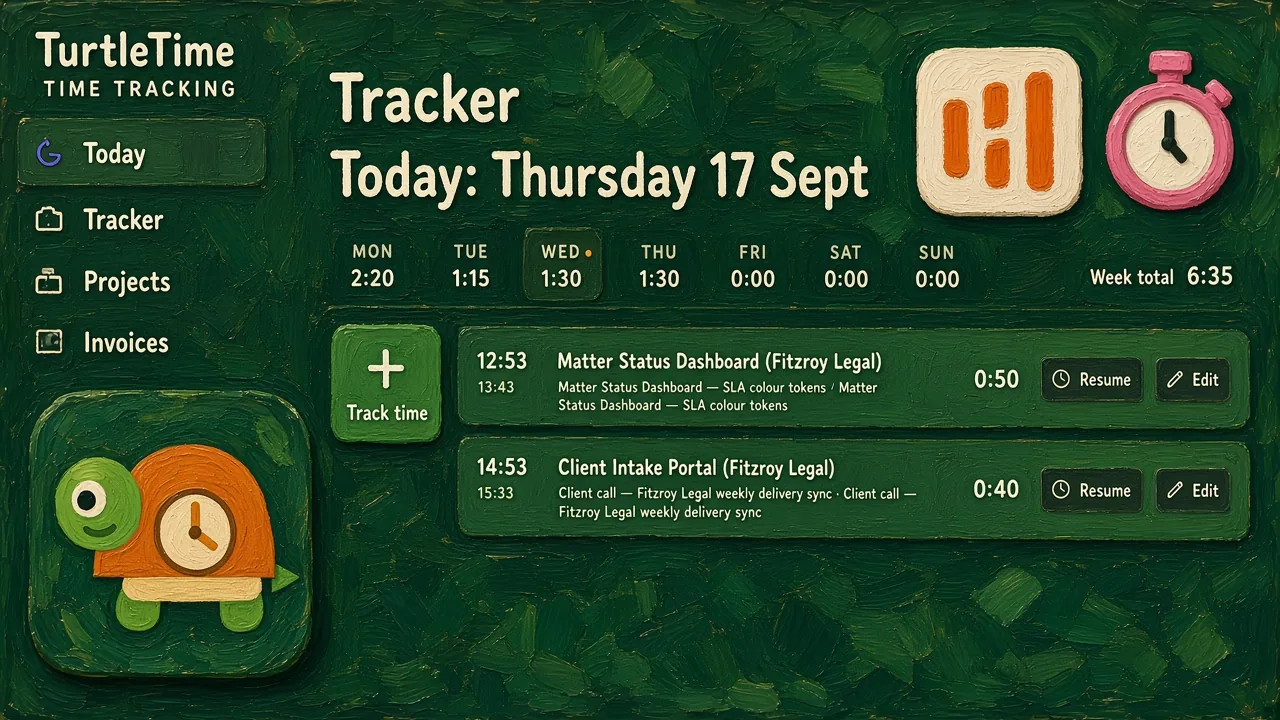
- Start, stop, resume. Manual entries when you forgot. Live clock isolated so the list does not re-render every tick.
- Attribute time to a project and an optional Tides task. Same core.TimeEntry row. Source is turtletime, tides or manual.
- Billable flags, expenses, utilisation. Capacity from monthly_hours_basis scaled to the period.
- Submit a week. Admins approve or decline. Then you draft the invoice from completed, billable, uninvoiced time.
- Rates resolve project → member → 0. One invoice line per time entry and per billable expense. INV-#### per workspace.
- Tides-sourced entries and entries still sitting in approval are excluded from the draft. Invoiced expenses lock.
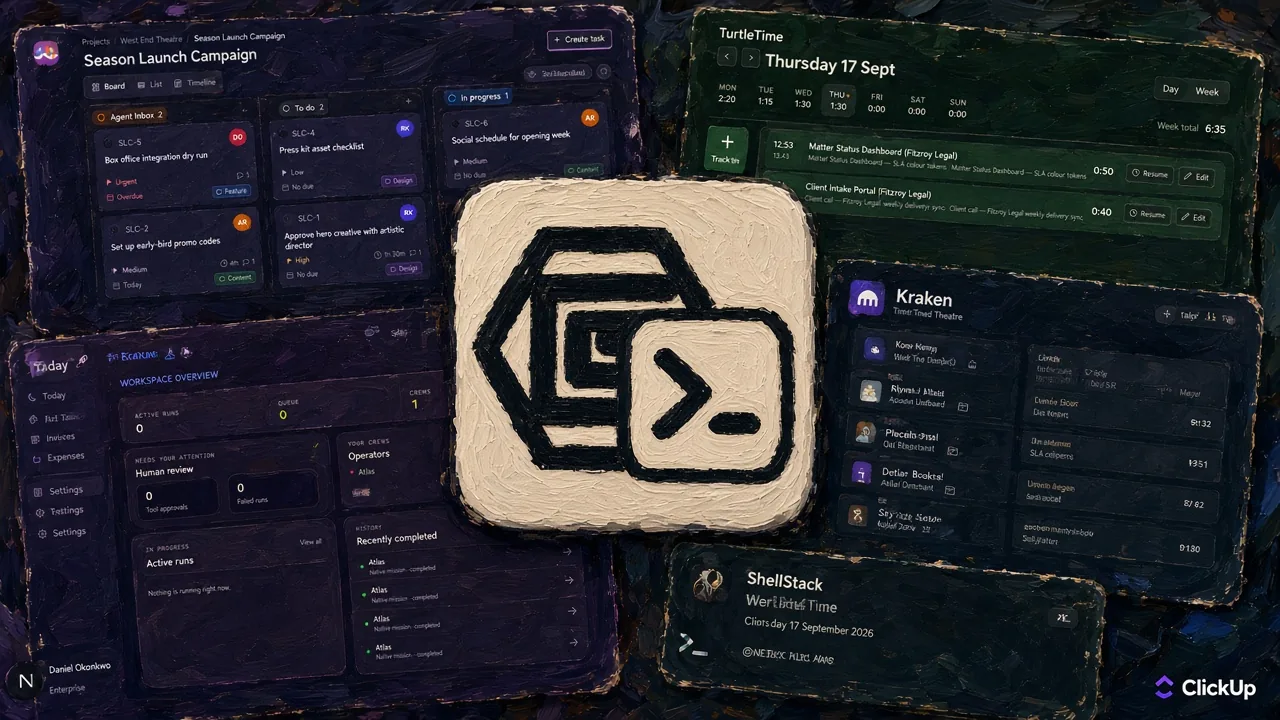
- The client list is core.Client. Visibility flags, not a TurtleTime-only copy. Kraken pages can hang off the same client and project.
- Composio rule: googlecalendar.event_ended can draft a time entry. Mattermost for workspace notifications. Portal launch token if you arrived from ShellStack.
I did not want a prettier Toggl. I wanted the hour and the card to be the same fact.
Timely and Memtime will still win if you want the desktop to watch you. We do not do that. If you wanted surveillance, you would not be reading this.
Use TurtleTime when time is how you get paid, not how you satisfy a timesheet policy.